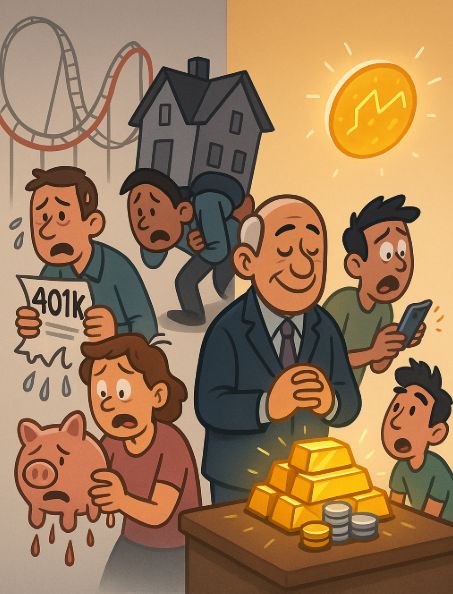
Economic research provides a broader way to understand gambling by examining its effects on consumers, businesses, employment, government revenue and local economies. Rather than looking only at how much money gambling companies generate, researchers study where that money comes from, where it goes and what wider effects it produces.
This approach helps explain why the economic impact of gambling can differ significantly between markets.
One of the clearest findings from gambling-related economic research is that regulated gambling creates measurable commercial activity.
Operators generate revenue, employ workers, purchase goods and services, and pay taxes and licensing fees. These activities connect gambling with other parts of the economy.
In the United States, commercial gaming generated a record $78.72 billion in gross gaming revenue during 2025, according to the American Gaming Association.
The industry also generated approximately $18.08 billion in gaming tax revenue during the same year.
Research also considers employment when measuring gambling’s economic contribution.
Casino operators, betting businesses, lotteries and technology companies employ people in areas ranging from hospitality and customer service to information technology, finance and management.
The economic effect can extend further through suppliers and other businesses that provide products and services to gambling companies.
Large casino resorts may have an especially broad employment footprint because they can combine gaming with hotels, restaurants and entertainment.
In certain destinations, gambling is closely connected to tourism.
Visitors may travel specifically to casino destinations and spend money on accommodation, restaurants, transportation and entertainment.
Economic research therefore distinguishes between gambling spending by local residents and spending generated by visitors. Tourism-related spending can represent additional economic activity for a region, although the size of the effect depends on the destination and its overall tourism market.
Research also examines the potential costs associated with gambling.
Problem gambling can contribute to financial hardship, reduced productivity and demand for treatment or support services. These effects may not appear in casino revenue statistics but can still have economic consequences.
This is why economists generally need to examine both economic benefits and economic costs.
One of the more complicated questions in gambling economics is whether gambling creates genuinely new economic activity or mainly redirects consumer spending.
For example, money spent at a casino might otherwise have been spent at a restaurant, cinema or other entertainment business.
If the casino attracts tourists who would not otherwise visit the area, however, some of that spending may represent additional economic activity.
This distinction is important when evaluating claims about gambling’s economic contribution.
Online gambling is another major area of research.
Grand View Research estimates that the global online casino market was worth approximately $19.1 billion in 2024 and could reach around $38 billion by 2030.
The expansion of digital gambling can change employment patterns, business costs, consumer access and the geographic distribution of gambling revenue.
It also creates new questions around regulation, taxation and economic measurement.
Economic research helps policymakers evaluate gambling using measurable evidence rather than relying only on industry revenue figures.
Researchers can examine:
Looking at these factors together provides a more balanced assessment of gambling’s role in an economy.
Research suggests that gambling can generate substantial commercial activity, employment and government revenue, while its broader economic impact depends on how the market operates and where the money ultimately flows.
The most useful analysis therefore goes beyond headline revenue figures. Examining benefits, costs, consumer behavior, taxation and the movement of money through the wider economy provides a much more complete understanding of gambling’s economic role.